Showing posts with label diversity. Show all posts

Sunday, 21 July 2019

Staying Loud

This week in 1969, the first person set foot on the moon. You can't miss it in the news at the moment - it's on all the time - a celebration of the moment 50 years ago when Neil Armstrong said his famous words. It was a moment that brought the whole world together - a moment when millions and millions of people united sat around TV screens and radios waiting for a significant bit of history to unroll before their eyes. The astronauts left a plaque on the moon that said 'we came in peace for all mankind' and President Nixon said that in this moment '.....all the people on this Earth are truly one'.

This week in 1969, for a moment, the world was united. An amazing moment where people who wouldn't ever meet face to face and would probably cross the street before speaking to united together around the same thing, with the same awe and amazement. 

Yet this moment only happened because of conflict - because the US believed that if the Soviet Union got their first then they had lost somehow. They made a commitment to getting to the moon first because the Soviets had beaten them at everything else when it came to the space race. 

Yet this moment happened only a year after Martin Luther King was assassinated because his fight for civil rights for all was so distasteful to those traditionally in power in the US he had to be wiped out. This moment was only a moment and didn't - doesn't - mean that the world was then united. 

Because in 2019 we watch as the US President stands in silence as a rally chants 'send her back' to a Somalian born American citizen who says stuff they don't like.

Because in 2019 we hear news of how their are people living in effectively concentration camps on the southern US border and being treated like not-humans. 

Because in 2019 we face the prospect of having a prime minister be announced in the next week who thinks its OK to tell jokes about people's choice of religious dress and to mock where people come from in a way that speaks of prejudices that should have died out a long time ago (and are scarily similar to the rhetoric that led to the chanting in the US).

Because in 2019 we watch programmes like 'Years and Years' and 'The Handmaids Tale' and worry how close they are to the truth. 

I have been challenged in the last few weeks that where we see wrong - those things that divide and don't unite that we need to call it out. I have been challenged that we need to not stand by and let it happen as hostile and divisive policies and ideas begin to presented as normal and OK. I don't want to be complicit in the chanting of 'send her back'. I don't want to be complicit in the hostile environment that shuts the door in the faces of people who are desperately seeking help, that sends people to a home that hasn't been a home for many years because of a lost piece of paperwork.... I don't want to be complicit in all of this....

In 1969 the first meal that was shared on the moon was communion. Buzz Aldrin unpacked bread and wine and together the crew committed the mission to God, recognising that in this meal that unites, in this meal where all invited, that there in it was a centre that they must not lose. The language of bread and wine transcends cultural barriers and different languages and identities. In that moment where we centre on the story of Jesus, we are united in his love which reaches the whole world........ And its because of Jesus that we must call our leaders to account and I will not ever, I hope, choose to be silent. 

Love from the centre of who you are; don’t fake it. Run for dear life from evil; hold on for dear life to good. Be good friends who love deeply; practice playing second fiddle.
Don’t burn out; keep yourselves fuelled and aflame. Be alert servants of the Master, cheerfully expectant. Don’t quit in hard times; pray all the harder. Help needy Christians; be inventive in hospitality.
Bless your enemies; no cursing under your breath. Laugh with your happy friends when they’re happy; share tears when they’re down. Get along with each other; don’t be stuck-up. Make friends with nobodies; don’t be the great somebody.
Don’t hit back; discover beauty in everyone. If you’ve got it in you, get along with everybody. Don’t insist on getting even; that’s not for you to do. “I’ll do the judging,” says God. “I’ll take care of it.”
Our Scriptures tell us that if you see your enemy hungry, go buy that person lunch, or if he’s thirsty, get him a drink. Your generosity will surprise him with goodness. Don’t let evil get the best of you; get the best of evil by doing good.
Romans 12:9-21 (The Message)


Monday, 15 December 2014

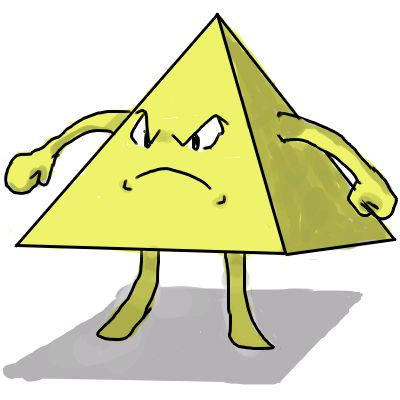
The Parable of the Polygons (and let's add some shapes with curved edges because they're important too)

I often talk about what normal is with one particular mathematician friend. Whenever anyone talks about what normal is then there needs to be a central defining point. For us, (jokingly of course) it's people like us. We're two different people with a different set of beliefs but with a number of things that unite us, so if we are both normal the concept of what is normal (if it is to be us) must be quite diverse. What I value in our normalness together is the fact that we can engage on a level that has more depth than engaging with people who are just like us. 

I've been doing a lot of thinking about community building and hospitality in a church context. When we look to belong we often look to people who are like us. Same social standing, same economic background, same interests, same...... those social groupings are based on our own concept of normalness. To begin to let the group grow beyond that normality is seen as taking risks or messy or rocking the status quo. 

Or is it?

I recently came across the 'Parable of the Polygons' which was shared on facebook. This attracted me because of the word Polygon and probably put a lot of people off because it sounds a bit mathematical. Anyway, have a read and a go, it is really interesting - like a game you could play for ages..... and there are graphs. 

The general gist of the Parable of the Polygons is that the choices we make in the way we relate to different social groupings and the way we invite people to be part of our own social groupings can cause harm if we don't make those choices carefully. We can say we are seeking equality, we are seeking to embrace all, but in making bad choices as to who we spend time with we could be creating a community made up of unhappy triangles....it'll all make sense if you have a play... go on, I dare you. 

The writer wraps up with three points, the last one of which tells us to 'demand diversity near you'. They say that we need to look around us and that if we are all triangles we're going to be 'missing out on some amazing squares in your life - that's unfair to everyone'. 

The results of this parable are interesting - that where we demand a bit of diversity in our groupings, this makes a huge positive difference overall. 

So, why is this important in the context of a church community? 

Well, words are batted around about being welcoming, inclusive, seeking diversity; we say that God's love is for everyone, not just people like us, that Jesus died on the cross for everyone, not just those we like, they just need to respond to him. But then we mourn (or some of us secretly love I reckon) the fact that churches are monochrome, made of one generation, too family orientated, too feminine, too masculine, just too..... 

What the Parable of the Polygons shows us is that where a small minority are committed to challenging the biases that naturally exist in our communities, that can make a difference, but that it takes work. It doesn't take giving up and hoping it happens. It doesn't take giving in and saying 'well this inevitable'. It takes 2,3, 4..... people who are committed to being anti-biased to change a community, and as more people see the change, feel the change, recognise it as beneficial to the wider community they will join too. 

In recognising the diversity that should naturally exist in the people we group with as a local church, we recognise how society has changed. We'd like to hold on to a time when society was not as it is today, but then we miss the beauty of what we can learn from the God places - the thin places where heaven and earth meet that exist in the communities around us. 

So perhaps we need to change where the boundaries are, and that's what those triangles and squares seeking diversity are doing. Where the status quo changes to something more reflective of where people actually are, where the diversity of culture is expressed, then the community we are part of becomes better, more beautiful, more reflective of the Image of God in which we were created. In the end perhaps we'll be happier together....?

I've been reading 'Tracks and Traces' by Paul Fiddes. I love this book... he says on p133....

".... If we are to minister to society as a whole, and to its various social groupings that can no longer be confined to a nuclear family, then we must learn to 'open up space' within the boundaries of the gathered church. We must learn hospitality which is not patronizing and which values people for whom they are. We must let our living space overlap with others". 

A type of hospitality that is unbiased? Welcoming the squares and the triangles and the shapes with curved edges? Is that more normal than gathering with people who are like me? Is that what a church with Christ at the head should look like?


Wednesday, 24 July 2013

Real life graphs are not all the same

When I was at secondary school I was proud of the fact that I was 'an individual' - I didn't go with the crowd. I was also very lonely as because I was a bit different I didn't really fit in. At school the in-crowd was not where I wanted to be, I was too much of a geek for the people who were trying to fit in with the in-crowd and I was never very confident and struggled to make friends.

Because I have always been on the edge, not quite fitting in to any particular group, sometimes in the centre of the group, but then gradually pushed to the edge, I realised quite quickly that people don't necessarily expect you to be different to them. If someone is found out to be different they're seen as the odd one and difficult to understand. I also began to recognise that people react to news in different ways. Some people want to share their news with the whole world, talking it through, solving problems alongside others and exploring ideas together. Others will keep their news to themselves until it becomes something that is not news any more and they have dealt with it and don't want to analyse it. Then there are all the extremes in between. There are people who want others to fix their problems, and others who don't believe they have a problem to fix ..... 

The thing is when you live in a diverse community (like church should be) is that everyone is not like you. Too often we expect people to be just like us. One of the privileges of being a minister is that people open up to you - they tell you about their lives and what makes them tick. They tell you the story of their faith journey and how they relate to God now. They reveal something of how they deal with life's problems and difficulties and as you get to know them you know how to care for them. 

If as a minister I assumed everyone dealt with life like me I'd miss the beautiful diversity in the people I care for. We are all made in God's image and in the way we relate to others in community we can express that in big ways as we learn about one another, know one another, give space to one another and serve one another. 

We've got to realise that people are different. We've got to recognise that what would make one person shout for joy makes another feel complete peace - it doesn't mean they haven't experienced the same thing, it just means they are different people, expressing their feelings in different ways.


When I was teaching real life graphs I would often get my classes to draw a graph of their emotions during the day. Some pupils would draw big ups and downs. Some would have a flatter line with small troughs and hills. Some would say, emotions? What are they? I don't want to talk about them. 

My graph is quite flat. I get grumpy, but I don't weep very often. I smile, but I don't scream with delight. I probably won't tell you about it or ask you to analyse it with me, I'm a mathematician - mathematicians solve problems alone most of the time.....but I'm there.... level headed and journeying on. 

When we are journeying with others its important to recognise what graph they would draw. God made us all different, and we have to celebrate that, but also honour one another in our differences - never expecting anyone to act exactly like us.

 "I want you to think about how all this makes you more significant, not less. A body isn’t just a single part blown up into something huge. It’s all the different-but-similar parts arranged and functioning together. If Foot said, “I’m not elegant like Hand, embellished with rings; I guess I don’t belong to this body,” would that make it so? If Ear said, “I’m not beautiful like Eye, limpid and expressive; I don’t deserve a place on the head,” would you want to remove it from the body? If the body was all eye, how could it hear? If all ear, how could it smell? As it is, we see that God has carefully placed each part of the body right where he wanted it".                                      1 Corinthians 12:14-18